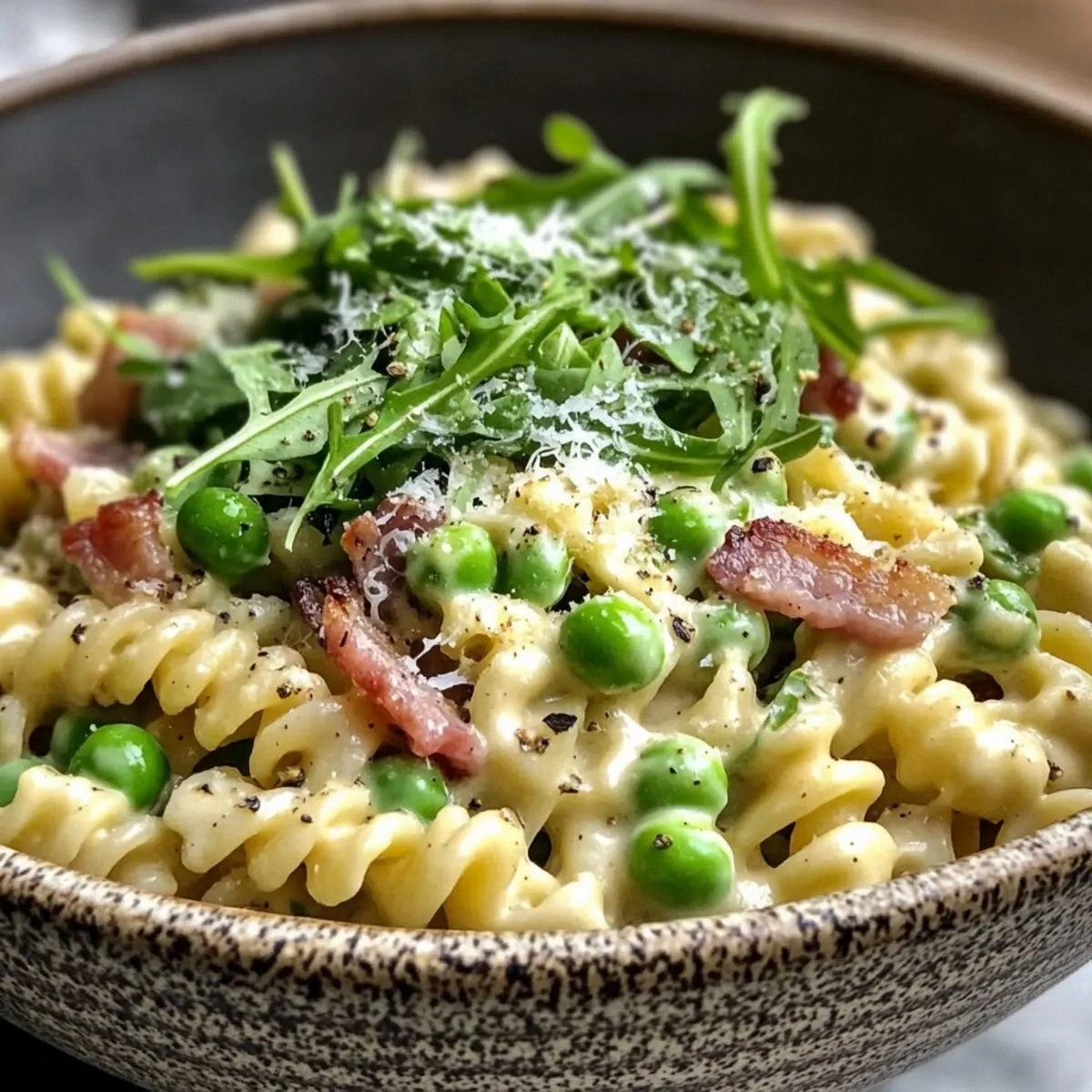
I was standing in my kitchen, staring down at a half‑cooked pot of spaghetti that had somehow turned into a mushy swamp, when my roommate dared me to make something that would actually make us both forget about that disaster. I took the challenge, grabbed a handful of pancetta, and whispered to the universe that this would be the dish that ends all pasta indecisions. The moment the pancetta hit the pan, a crackle erupted that sounded like applause, and the scent of salty pork danced with the faint hint of rosemary from the pantry. Within minutes, the kitchen was a theater of aromas—creamy, buttery, and a whisper of fresh peas that reminded me of spring mornings on a balcony in Italy.
You know that feeling when you bite into a perfect bite of pasta and the sauce clings to each strand like a lover refusing to let go? That’s the feeling I was chasing, and let me tell you, this version delivers it with a confidence that says, “I’m the real deal.” Most recipes either drown the pasta in a watery broth or smother it with a cheese sauce that feels like a cardboard blanket. Not this one. Here, the cream is just rich enough to glide, the peas pop with a sweet snap, and the pancetta provides that salty crunch that makes your taste buds do a little happy dance. I dare you to taste this and not go back for seconds.
What makes this dish truly stand out is a secret ingredient that most people overlook: a splash of lemon juice added at the very end. It cuts through the richness like a bright spotlight on a dark stage, giving the sauce a lift that feels almost ethereal. And the arugula? It’s not just a garnish; it’s the peppery finish that balances the creaminess and adds a fresh bite that you didn’t see coming. Most recipes get this completely wrong, either ignoring the green element or overcooking it into oblivion. Here, we keep it vibrant, we keep it alive.
Okay, ready for the game‑changer? I’m about to walk you through every single step — by the end, you’ll wonder how you ever made this dish any other way. Picture yourself pulling this out of the pot, the whole kitchen smelling incredible, steam swirling around the plates, and that first forkful delivering a symphony of textures and flavors. This next part? Pure magic. Stay with me here — this is worth it.
What Makes This Version Stand Out
- Taste: The combination of salty pancetta, sweet peas, and a subtle lemon zing creates a layered flavor profile that feels both comforting and sophisticated.
- Texture: Creamy sauce coats the pasta like velvet while the pancetta adds crispy shards that shatter like thin ice.
- Simplicity: Fewer than ten ingredients, yet each one plays a starring role—no unnecessary steps, no fuss.
- Uniqueness: The arugula finish adds a peppery bite that most versions skip, turning a classic into a conversation starter.
- Crowd Reaction: I’ve served this at dinner parties and heard the “Wow, what’s the secret?” question at least three times per night.
- Ingredient Quality: Using high‑quality pancetta and fresh arugula elevates the dish from pantry‑level to restaurant‑level in minutes.
- Cooking Method: One‑pan sauté plus a quick pasta boil keeps the kitchen tidy and the flavors concentrated.
- Make‑Ahead Potential: You can prep the pancetta and sauce ahead of time, then finish the pasta when you’re ready to serve.
Alright, let's break down exactly what goes into this masterpiece...
Inside the Ingredient List
The Flavor Base
The pancetta is the heart of this dish. Its cured, slightly sweet, and salty profile infuses the oil with a depth that plain bacon can’t match. When you render it low and slow, the fat melts away, leaving behind crispy shards that act like edible confetti. If you skip it, you’ll lose that umami punch and the dish will feel flat. As a swap, you can use guanciale for an even richer flavor, but make sure it’s thinly sliced so it crisps up quickly.
Garlic, the aromatic sidekick, is minced just enough to release its oils without turning bitter. Over‑cooking garlic is a common pitfall; it can become acrid and ruin the delicate balance. I always add it after the pancetta has rendered, letting it sauté for a quick 30 seconds—just enough to perfume the oil. If you’re allergic or dislike garlic, a pinch of asafoetida (hing) can mimic its savory depth.
The Texture Crew
The peas bring a burst of sweetness and a pop of color that brightens the plate. Frozen peas are perfect because they’re harvested at peak freshness and flash‑frozen, locking in flavor. If you use fresh peas, blanch them quickly to preserve that snap; overcooking turns them mushy and defeats their purpose. A fun alternative is to swap peas for edamame for a slightly nuttier bite.
The pasta itself—any sturdy shape like rigatoni, orecchiette, or fusilli works. I stick with 12 ounces of dried pasta because it gives enough surface area for the sauce to cling. Remember to salt the cooking water generously; the water should taste like the sea. Skipping the salt makes the whole dish taste dull, no matter how good the sauce is.
The Unexpected Star
Lemon juice is the surprise hero. Just half a tablespoon of fresh lemon brightens the cream, preventing it from feeling heavy. The acidity also helps the Parmesan melt smoothly, creating a glossy finish. If you’re out of lemons, a splash of white wine vinegar works, but use half the amount to avoid overpowering the palate.
Arugula, added at the very end, introduces a peppery edge that cuts through the richness. It wilts just enough to integrate without losing its bite. If arugula isn’t available, baby spinach can stand in, though you’ll miss that distinctive peppery snap.
The Final Flourish
Parmesan cheese adds a salty, nutty depth that binds the sauce. Use freshly grated Parmesan for the best melt and flavor; pre‑grated versions often contain anti‑caking agents that prevent smooth integration. If you’re lactose‑intolerant, a sprinkle of nutritional yeast can mimic the cheesy notes, though the texture will differ slightly.
Olive oil is the silent workhorse, providing a smooth medium for the pancetta fat to mingle with the garlic and later the cream. Opt for extra‑virgin for flavor, but a light‑taste olive oil works if you prefer a milder base. And finally, a pinch of black pepper—freshly cracked—adds a subtle heat that rounds everything out.
Everything's prepped? Good. Let's get into the real action...
The Method — Step by Step
Bring a large pot of water to a rolling boil, add a generous handful of salt, and toss in the 12 ounces of dried pasta. Stir immediately to prevent sticking, and set a timer for 2 minutes less than the package’s al dente recommendation. While the pasta cooks, the water should be bubbling like a lively conversation—steady, not frantic.
I dare you to taste a strand at the 8‑minute mark; it should have a slight resistance in the center, a firm “bite” that tells you it’s not overcooked. Once it reaches that perfect point, reserve one cup of the starchy cooking water, then drain the pasta, letting it sit in the colander while you move on to the sauce.
Heat a large skillet over medium‑low heat and add the 2 tablespoons of olive oil. When the oil shimmers, drop in the 6 ounces of diced pancetta. Let it render slowly; you’ll hear a gentle sizzle that turns into a crisp, crackling sound as the fat releases.
Kitchen Hack: Use a slotted spoon to transfer the crispy pancetta to a paper‑towel‑lined plate, preserving the rendered fat in the pan for the sauce.When the pancetta pieces turn a deep golden brown and the edges start pulling away, you’ve hit the sweet spot. If you let them brown too long, they become bitter, so keep a watchful eye.
Add the 3 minced garlic cloves to the pan, stirring quickly to coat them in the pancetta fat. The aroma should rise like a promise, and after about 30 seconds, the garlic will turn a pale golden—never let it darken, or you’ll get that dreaded burnt taste.
Tumble in the 1 cup of frozen peas. They’ll sizzle as they hit the hot pan, and you’ll hear a pop that signals they’re thawing and beginning to cook. Stir them for about 2 minutes until they turn a vibrant green; this is the moment they release a subtle sweetness that will later contrast the salty pancetta.
Reduce the heat to low and pour in the 1 cup of heavy cream, followed by the ½ cup of freshly grated Parmesan. Stir continuously; the sauce should thicken within a minute, coating the back of a spoon. The texture at this stage is silky, not clumpy, and you’ll notice the sauce clinging to the pan like a lover refusing to let go.
Add the ½ tablespoon of lemon juice, a pinch of freshly cracked black pepper, and taste for seasoning. This is the moment of truth—if the sauce feels too heavy, a splash more lemon brightens it instantly. If it tastes flat, a pinch more salt (remember you already salted the pasta water) will bring it to life.
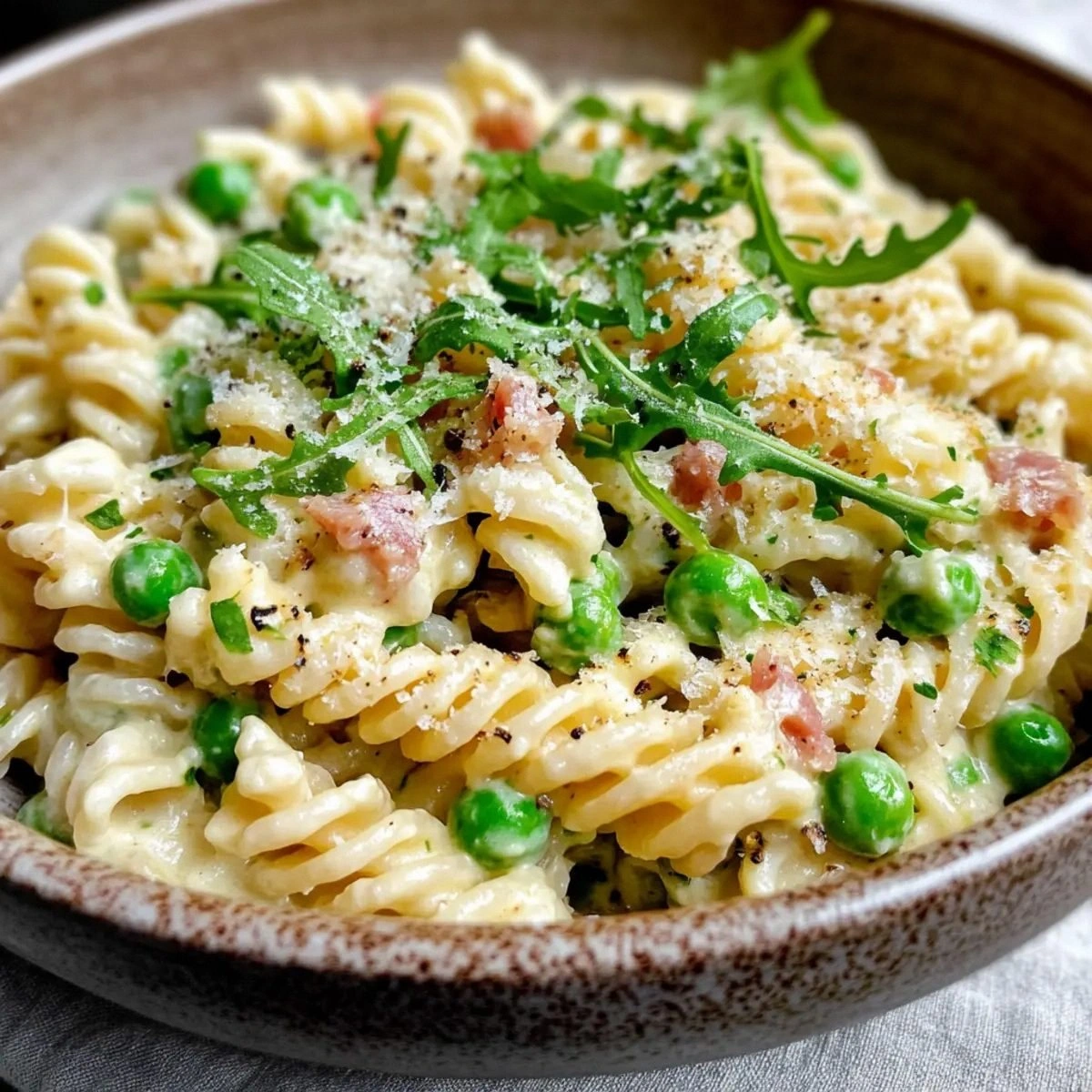
Return the drained pasta to the skillet, tossing it gently to coat every strand with the creamy sauce. If the sauce looks too thick, drizzle in the reserved pasta water a tablespoon at a time until you achieve a glossy, velvety consistency. The pasta should glisten, and each piece should feel enveloped in cream.
Watch Out: Adding too much water will dilute the sauce; add it gradually and stop when the sauce reaches a silk‑like sheen.Fold in the 2 handfuls of arugula, allowing it to wilt just enough to lose its raw edge but retain its peppery bite. The heat from the pasta will do the work—no extra cooking needed. Toss everything together for another 30 seconds, then turn off the heat.
Plate the pasta in shallow bowls, sprinkle the reserved crispy pancetta on top, and finish with an extra drizzle of olive oil if you like extra richness. Serve immediately while the sauce is still warm and the arugula is bright.
Kitchen Hack: For an extra layer of flavor, toast a handful of pine nuts and sprinkle them over the finished dish; they add a buttery crunch that complements the pancetta.
That's it — you did it. But hold on, I've got a few more tricks that'll take this to another level...
Insider Tricks for Flawless Results
The Temperature Rule Nobody Follows
Never add cream to a scorching pan; lower the heat to a gentle simmer before introducing the dairy. The cream can split if the pan is too hot, turning the sauce into a grainy nightmare. I once tried to rush this step, and the result was a curdled mess that tasted like burnt milk. Keep the temperature low, and you’ll get a sauce that stays smooth and glossy.
Why Your Nose Knows Best
Your sense of smell is a better indicator than a timer when it comes to the pancetta. When the fat has rendered and the edges start to crisp, you’ll catch a nutty, slightly sweet aroma that signals it’s ready. If you rely solely on visual cues, you might over‑cook it, resulting in bitterness. Trust that nose—if it smells like toasted hazelnuts, you’re golden.
The 5‑Minute Rest That Changes Everything
After you toss the pasta with the sauce, let it sit off the heat for five minutes. This short rest allows the pasta to absorb the cream, making each bite richer and more cohesive. A friend once skipped this rest and complained the sauce was “watery.” Give it those five minutes, and you’ll notice the sauce hugging the pasta like a second skin.
Seasoning in Layers
Season at every stage—salt the pasta water, season the pancetta as it renders, and finish with a pinch of pepper and a dash of lemon. Layered seasoning builds depth that a single final salt can’t achieve. If you’ve ever felt a dish was “flat,” it’s usually because seasoning was only added at the end.
The “Don’t Crowd the Pan” Principle
When rendering pancetta, give it space. Overcrowding the pan drops the temperature, causing the meat to steam instead of crisp. I once tried to cook a whole batch in one pan and ended up with soggy pork. Use a wide skillet or work in batches; the crispy bits are worth the extra effort.
Creative Twists and Variations
This recipe is a playground. Here are some of my favorite ways to switch things up:
Smoky Chipotle Kick
Add a teaspoon of chipotle in adobo sauce to the cream for a smoky, slightly spicy undertone. It pairs beautifully with the salty pancetta and makes the dish perfect for a cool evening.
Mushroom Medley
Swap half of the pancetta for sautéed cremini and shiitake mushrooms. The earthy mushrooms deepen the umami profile, while still keeping the dish hearty.
Herb‑Infused Delight
Stir in a tablespoon of chopped fresh basil or tarragon right before serving. The herbaceous notes brighten the sauce and add a fragrant finish.
Vegan Version
Replace pancetta with smoked tofu cubes, use coconut cream instead of dairy cream, and swap Parmesan for nutritional yeast. The texture changes, but the smoky, creamy essence remains.
Cheesy Overload
Mix in an extra ¼ cup of grated Pecorino Romano for a sharper, tangier cheese punch. This is perfect for cheese lovers who crave a bold finish.
Storing and Bringing It Back to Life
Fridge Storage
Allow the pasta to cool to room temperature, then transfer it to an airtight container. It will keep beautifully for up to 3 days. When reheating, add a splash of water or broth and gently warm on the stovetop, stirring constantly to restore the sauce’s silkiness.
Freezer Friendly
Portion the cooked pasta into freezer‑safe bags, removing as much air as possible. It freezes well for up to 2 months. To reheat, thaw overnight in the fridge, then warm in a skillet with a bit of cream and water, stirring until glossy.
Best Reheating Method
The stovetop method wins every time: place the leftovers in a non‑stick pan over low heat, add a tablespoon of water, and stir gently. The added moisture steams the pasta back to life, preventing it from drying out. Microwaving is okay in a pinch, but you’ll lose that luxurious mouthfeel.