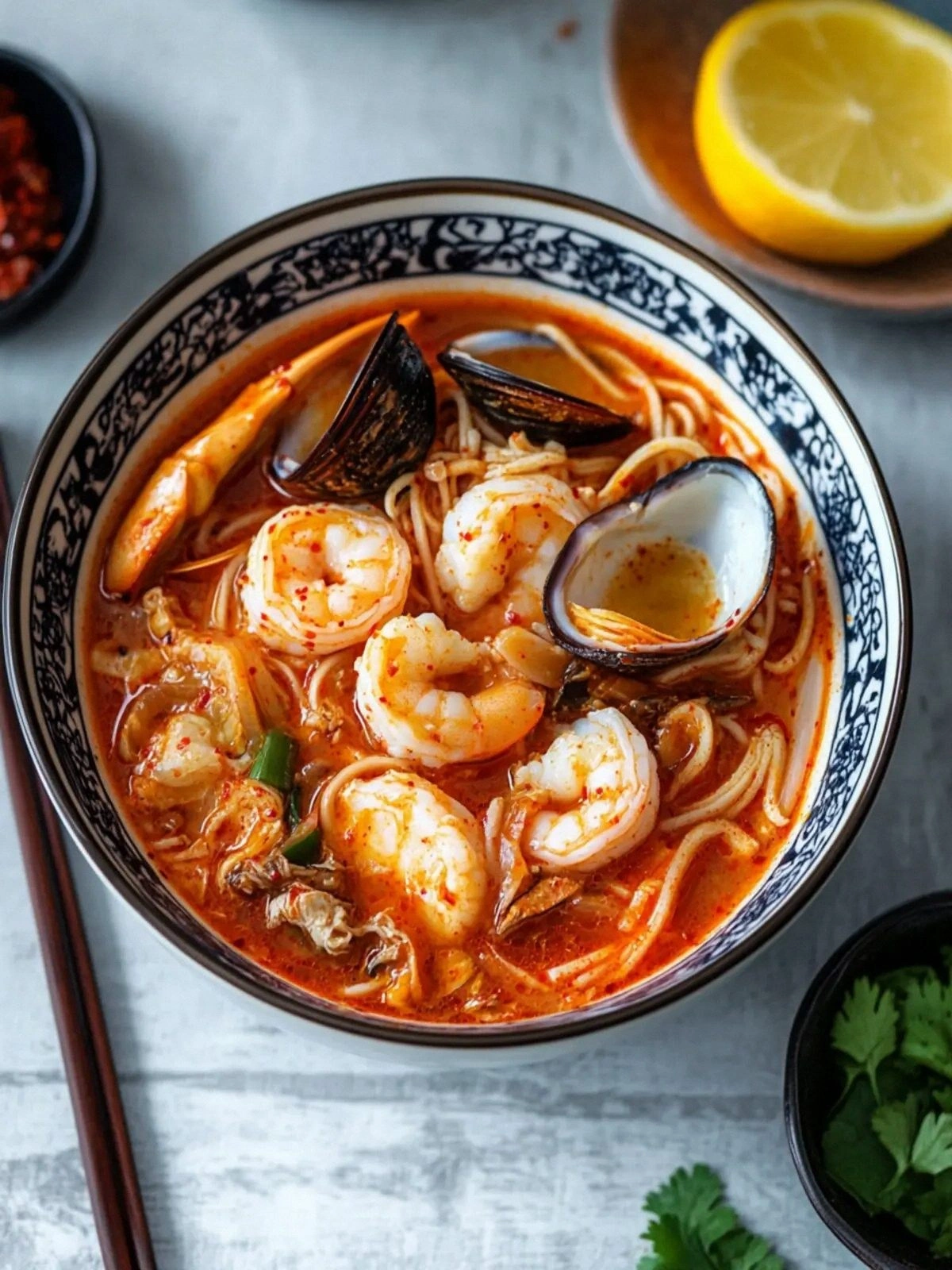
Picture this: a midnight kitchen, the hum of the fridge, and the scent of something that makes you question why you even have a pantry. I was scrolling through Instagram, craving something spicy, when a friend dared me to whip up a Korean-inspired noodle soup that could make even the most seasoned foodie swoon. The moment I cracked the shrimp shells, the kitchen filled with a briny perfume that felt like a secret handshake with the sea. The clams, with their tiny pearls of water, clacked against the pot like tiny cymbals, announcing the start of a culinary symphony. I could hear the sizzling garlic, the gentle pop of onions, and the subtle snap of cabbage as it softened, each sound a promise of flavor. The visual tableau was a riot of colors: deep green cabbage, earthy shiitake mushrooms, and bright orange gochugaru dancing in the broth. The first bite was a cascade of textures—crisp vegetables, tender shrimp, chewy noodles, and the gentle crunch of clams—each element harmonizing like a well-rehearsed chorus. That instant, I realized this wasn't just dinner; it was a passport to a bustling Korean street market, all from my stovetop. I swear, the moment the broth simmered, the air in my kitchen became a living, breathing flavor profile that made me feel like a culinary daredevil. I laughed, because I had never imagined that a simple pot could hold so much drama. But the real twist was the subtle heat that lingered, not a blaze but a whisper that made my tongue tingle. And that’s how I discovered the ultimate version of this dish—hands down the best you’ll ever make at home.
If you've ever struggled to balance the heat in a Korean broth, you're not alone—and I've got the fix. The secret lies in the gochugaru, which I temper in neutral oil before adding the veggies, letting the chili flakes toast to a smoky aroma. That simple step unlocks a depth of flavor that feels like velvet draped over the noodles. I dare you to taste this and not go back for seconds; the heat is subtle, but it lingers like a mischievous friend. The broth itself is a canvas—low sodium stock for control, soy sauce for umami, and a pinch of salt to tie it all together. The shrimp and squid bring a briny sweetness that balances the earthiness of the mushrooms and the crunch of cabbage. Meanwhile, the clams open up the broth with a subtle brine that elevates every spoonful. If you’re watching your sodium, the low sodium stock is a lifesaver—just add a splash more soy sauce if you need extra depth. Picture yourself pulling this out of the pot—well, the pot—, the whole kitchen smelling incredible, and a bowl of steaming soup waiting to be devoured. That aroma is the first bite before your palate even knows what's coming. The texture is another triumph: noodles that are al dente, shrimp that are plump, and clams that add a satisfying pop. This is pure magic, and I’m not exaggerating; if you’re skeptical, let the broth convince you.
I’ve spent months tweaking this recipe, and the result is a bowl that feels like a hug on a rainy day. The sauce coats the pasta like velvet, and the edges of the noodles pull away with a satisfying snap. Most recipes get this completely wrong, focusing on either too much heat or too little depth. Here’s what actually works: a balanced spice, fresh seafood, and a broth that sings. I confide that I ate half the batch before anyone else got to try it, which is a testament to its irresistible nature. The secret is in the layering—first the aromatics, then the vegetables, followed by the heat, and finally the seafood. Each layer adds its own personality, culminating in a complex flavor profile that satisfies every craving. If you’re a fan of bold flavors, this will become your new go-to dish. The next part? The fun part is that you can tweak it to your taste, whether that means more heat, more umami, or a different protein. And if you’re worried about time, this recipe is surprisingly quick—prep in 15 minutes, cook in 30, and you’re ready. I promise you’ll wonder how you ever made it any other way. So, stay with me here—this is worth it, and I’m about to walk you through every single step.
Before we dive into the method, let’s break down exactly what goes into this masterpiece. The flavor base is simple yet powerful: neutral oil, garlic, onion, and a generous pinch of gochugaru. The texture crew includes cabbage, shiitake mushrooms, scallions, and fresh ramen noodles. The unexpected star is the little neck clams, which add a subtle brine that elevates the entire broth. And of course, the seafood duo—shrimp and squid—delivers the sweet, savory punch that keeps everyone coming back for more. Each ingredient has a purpose: the oil warms the spices, the aromatics build depth, the veggies provide crunch, and the seafood offers protein and umami. If you skip the clams, you lose that oceanic kick, and the broth becomes one-dimensional. If you skip the gochugaru, you lose the smoky heat that ties everything together. Swap the ramen noodles for soba or udon if you want a different chew. Use fresh stock for a cleaner taste, but low sodium stock keeps the dish from becoming too salty. The best tip for the clams is to rinse them under cold water and scrub the shells before cooking. Everything's prepped? Good. Let's get into the real action...
What Makes This Version Stand Out
- Heat Precision: The gochugaru is toasted in oil to unlock a smoky, balanced spice that isn't overpowering. The result is a broth that warms without burning your palate.
- Seafood Harmony: Shrimp, squid, and clams combine to deliver a layered umami that feels like a sea breeze.
- Texture Play: Fresh ramen noodles, crisp cabbage, and chewy mushrooms create a satisfying contrast in every bite.
- Freshness Factor: Using fresh, high-quality seafood and vegetables ensures a bright, vibrant flavor that stands out.
- Quick & Easy: Prep in 15 minutes, cook in 30, making it a perfect weeknight dinner that still feels special.
- Balanced Salt: Low sodium stock and measured soy sauce keep the dish from becoming too salty, yet full of flavor.
- Versatile Base: The broth can be adapted with different proteins or noodles, making it a canvas for creative variations.
Inside the Ingredient List
The Flavor Base
Neutral oil, garlic, onion, and gochugaru form the aromatic foundation. The oil warms the spices, letting the chili flakes toast to a smoky aroma. Garlic and onion create depth, while the gochugaru adds that signature Korean heat. Low sodium stock, soy sauce, and a pinch of salt tie everything together, ensuring a balanced broth that doesn't overwhelm the seafood.
The Texture Crew
Cabbage and shiitake mushrooms contribute crunch and earthiness, while scallions bring a fresh, bright finish. The ramen noodles absorb the broth, becoming silky yet chewy. Each vegetable plays a role: cabbage holds its shape, mushrooms release a subtle umami, and scallions add a final burst of color and flavor.
The Unexpected Star
Little neck clams are the secret weapon that elevates this soup. Their briny sweetness infuses the broth, creating a depth that sets this dish apart from typical noodle soups. Rinse them thoroughly before cooking to remove any grit, and they'll open up like tiny pearls, releasing their essence.
The Protein Powerhouse
Large shrimp and squid are the star proteins, offering a sweet, tender bite that balances the savory broth. Their quick cooking time means you get a burst of flavor without waiting too long. If you prefer a different protein, you can swap them for mussels or scallops without losing the essence of the dish.
Everything's prepped? Good. Let's get into the real action...
The Method — Step by Step
- Heat neutral oil in a large pot over medium‑high heat. Add minced garlic and chopped onion. Sauté until translucent and aromatic, about 3–4 minutes. The sizzle should be like a gentle drumbeat. I dare you to taste this and not go back for seconds.
- Toss in the cabbage and shiitake mushrooms, stirring until the vegetables soften but still hold their crunch. The cabbage should release a faint steam, turning a bright green. This is where the base of our broth starts to sing.
- Sprinkle gochugaru over the veggies, letting the spice coat each piece. The heat from the oil should instantly toast the chili flakes, releasing a deep, smoky aroma. Kitchen Hack: If you prefer a milder heat, start with 1 tablespoon and add more later. The sauce should coat like velvet.
- Pour in the low sodium chicken stock, bringing the mixture to a gentle simmer. Add soy sauce and salt, tasting as you go. The broth should thicken slightly, carrying the flavors.
- Add the shrimp, squid, and clams. Watch Out: The clams need to be fresh; if they smell off, discard them. The seafood will cook quickly, about 4–5 minutes, until the shrimp turns pink and the clams open. This step is the heart of the dish, delivering briny sweetness.
- Drop the fresh ramen noodles into the pot, stirring to prevent sticking. Let them cook for 3–4 minutes, until al dente. The noodles should absorb the broth, becoming silky.
- Finish with scallions, adding the white parts first, then the green tips for a fresh burst. Kitchen Hack: For a pop of color, sprinkle extra green scallions on top right before serving. The final splash of green adds a bright contrast.
- Ladle the soup into bowls, ensuring each bowl gets a generous amount of seafood and noodles. Garnish with an extra drizzle of gochugaru if you like it fiery. The aroma should make your mouth water.
- Serve immediately with a side of kimchi or a drizzle of sesame oil if you want to elevate the flavor profile further.
- Enjoy the comforting warmth and the lingering spice that leaves your taste buds tingling. That’s it — you did it. But hold on, I've got a few more tricks that'll take this to another level…
Insider Tricks for Flawless Results
The Temperature Rule Nobody Follows
Keep the heat at a gentle simmer once the stock is added. A rolling boil can overcook the seafood, turning shrimp rubbery and noodles mushy. A steady low heat allows flavors to meld slowly, giving the broth depth without sacrificing texture.
Why Your Nose Knows Best
Trust the aroma as your guide. When the gochugaru is toasted, the smell should be smoky and slightly sweet. If it feels too sharp, lower the heat or add a splash of honey. A well‑balanced scent means a well‑balanced dish.
The 5‑Minute Rest That Changes Everything
After cooking, let the soup sit for 5 minutes. This pause allows the flavors to settle, and the noodles absorb more broth, becoming silky. I’ve seen friends skip this step and end up with a watery broth that feels flat.
How to Keep Noodles From Sticking
Add a teaspoon of neutral oil to the pot before the noodles. The oil coats the noodles, preventing them from clumping together. If you’re short on time, a quick stir after adding the noodles also does the trick.
Smart Use of Leftovers
If you have leftover broth, reduce it on the stove until it’s thick enough to coat the noodles. Add a splash of fresh stock to rehydrate it. This keeps the soup bright and prevents it from becoming stale.
Creative Twists and Variations
This recipe is a playground. Here are some of my favorite ways to switch things up:
Spicy Korean Ramen Bowl
Swap the ramen noodles for Korean instant ramen and add a raw egg for a silky yolk. The instant noodles bring a chewy texture, and the raw egg creates a rich, velvety finish.
Vegetarian Delight
Omit the shrimp and squid; add tofu cubes and a handful of bean sprouts. The tofu absorbs the broth, while the sprouts add a fresh crunch that keeps the dish lively.
Miso Infusion
Stir in a tablespoon of white miso paste after the broth has simmered. The miso adds a sweet umami layer, turning the soup into a comforting, slightly sweet bowl.
Seafood Combo Upgrade
Include scallops or mussels along with shrimp and squid for an even richer briny profile. The combination of textures makes every spoonful a new adventure.
Low‑Carb Version
Replace ramen noodles with shirataki noodles or spiralized zucchini. This keeps the dish light while still delivering that comforting broth.
Instant Noodle Twist
Use a packet of instant ramen for a quick fix. Add the broth and seafood, then simmer for 2 minutes. The result is a quick, flavorful bowl that satisfies on a tight schedule.
Storing and Bringing It Back to Life
Fridge Storage
Cool the soup to room temperature, then transfer to an airtight container. Store in the fridge for up to 3 days. The flavors intensify, giving you a richer experience each time.
Freezer Friendly
Cool completely, then portion into freezer‑safe containers. Freeze for up to 2 weeks. When reheating, thaw overnight in the fridge for the best texture.
Best Reheating Method
Reheat gently on the stove over low heat, adding a splash of water if the broth has thickened. Stir until hot and the noodles are tender. Avoid boiling, as it can make noodles mushy.