I still remember the first time I tried to make eggplant bruschetta at home. I was hosting a dinner party, trying to impress my friends with something "fancy yet approachable," and I ended up with what looked like gray mush on soggy bread. The eggplant was rubbery, the bread tasted like wet cardboard, and my friends politely picked at it like it was a science experiment gone wrong. I swore off eggplant bruschetta for years after that culinary disaster. But then, one summer evening in Florence, I tasted the real deal at a tiny trattoria where the nonna in the kitchen transformed those same humble ingredients into something that made me close my eyes and sigh with every bite. The eggplant was silky and caramelized, the bread had that perfect crunch that shatters like thin ice, and the flavors danced together like they were made for each other.
That moment changed everything. I became obsessed with cracking the code to perfect eggplant bruschetta, spending months testing different techniques, temperatures, and timing. I discovered that most recipes get this completely wrong — they treat it like regular tomato bruschetta with some eggplant thrown in, but that's like trying to make a symphony by adding extra violins to a drum solo. The eggplant needs to be the star, the bread needs to be your crispy stage, and every element needs to be treated with the respect it deserves. After burning through more eggplants than I care to admit (and eating more mediocre versions than any human should endure), I finally nailed it. This version has converted even the most stubborn eggplant skeptics, including my father who claimed he "didn't eat purple vegetables" for sixty years.
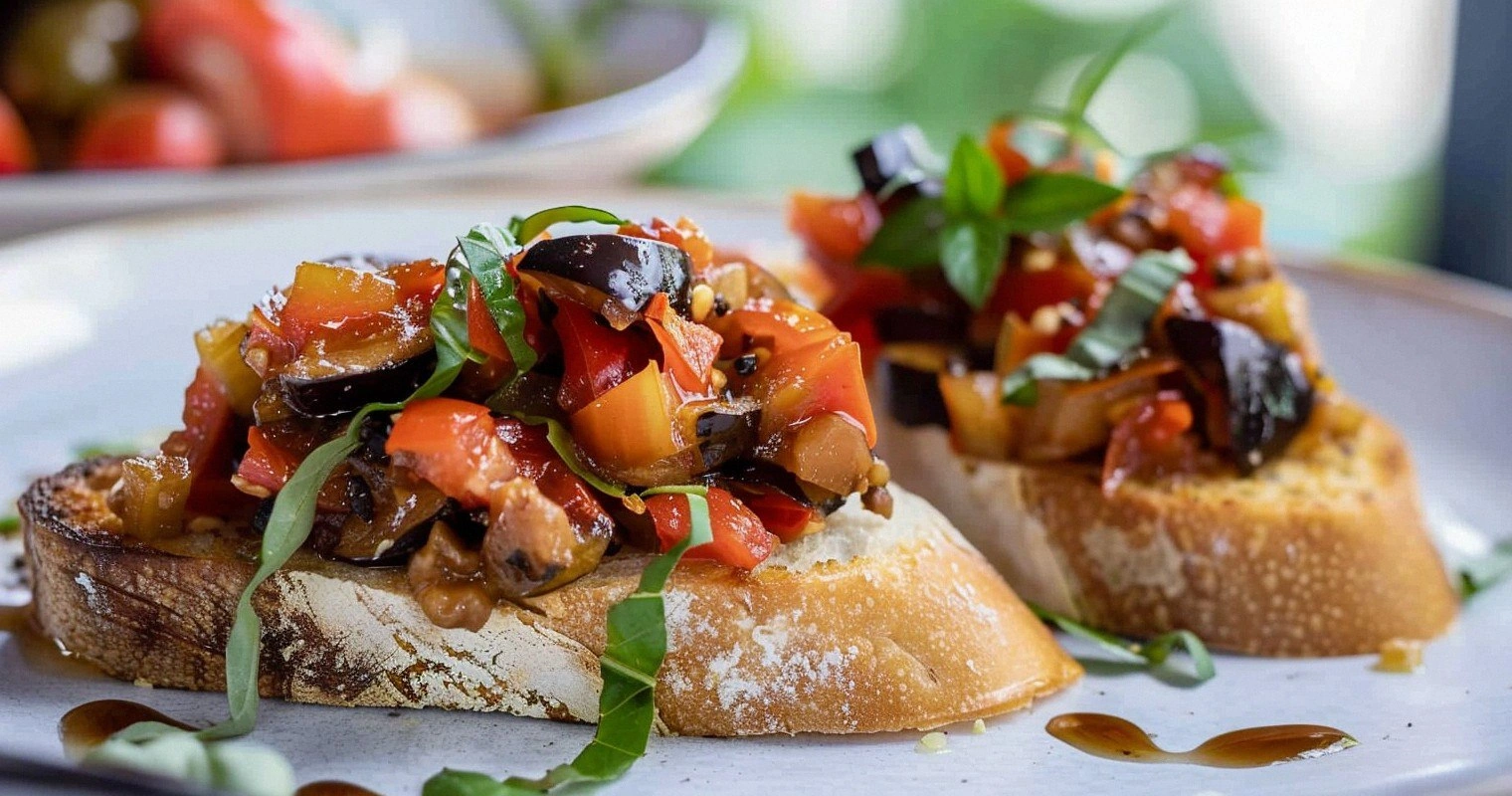
What makes this recipe different? We're going to salt and press the eggplant to draw out that bitter liquid that makes most people think they hate eggplant (they don't — they've just never had it prepared right). We'll roast it until the edges caramelize and the insides turn into velvet. The bread gets brushed with garlic oil and toasted until it's golden and crisp, creating little edible plates that can hold up to the toppings without turning into a soggy mess. And the combination of fresh herbs, good olive oil, and a touch of acid at the end? That's what takes this from good to absolutely unforgettable.
Picture yourself pulling this out of your oven, the whole kitchen smelling like an Italian grandmother's been cooking all day. The eggplant is meltingly tender with those crispy caramelized edges that give you little pops of concentrated flavor. The bread is warm and crunchy, ready to be piled high with the glossy, herb-flecked topping. Your guests will hover around the kitchen island, snatching pieces while claiming they're "just helping taste-test." I dare you to taste this and not go back for seconds — actually, I dare you to have any leftovers at all. Let me walk you through every single step — by the end, you'll wonder how you ever made it any other way.
What Makes This Version Stand Out
Silky Texture: Most recipes leave you with spongy, rubbery eggplant that squeaks when you bite it. Not here. We salt and press the eggplant first, then roast it low and slow until it transforms into the vegetable equivalent of velvet. The edges get those caramelized, crispy bits that provide textural contrast, while the insides stay creamy and luxurious.
Flavor Bomb Technique: Instead of just grilling or pan-frying, we're going to roast the eggplant with garlic and herbs until it concentrates into pure umami magic. This isn't just cooked eggplant — it's eggplant that's been coaxed into its fullest, most delicious potential. The natural sugars caramelize, creating depths of flavor that will make you want to eat it straight off the pan.
Bread That Actually Stays Crisp: Nobody talks about how regular bruschetta turns into a soggy mess within minutes. We've solved this age-old problem with a double-toasting technique that creates a protective barrier. The result is bread that stays crunchy for hours, giving you the perfect textural contrast against the tender eggplant.
Herb-Infused Oil: We make our own garlic-herb oil that's brushed on everything — the bread, the eggplant, even drizzled on top at the end. This isn't just olive oil with some herbs tossed in. We gently warm the oil with garlic and herbs to bloom their flavors, creating a fragrant elixir that ties the whole dish together.
Make-Ahead Magic: Unlike most appetizers that need to be served immediately, this one actually improves as it sits. The flavors meld and deepen, making it perfect for entertaining. You can prep everything ahead of time and just assemble when guests arrive, looking like a kitchen wizard while actually being incredibly relaxed.
Crowd-Pleasing Power: I've served this to people who "don't like eggplant" and watched them polish off an entire tray. The combination of crispy bread, silky eggplant, and bright herbs hits every note that makes appetizers addictive. It's sophisticated enough to impress food snobs but approachable enough that everyone wants the recipe.
Alright, let's break down exactly what goes into this masterpiece...
Inside the Ingredient List
The Flavor Base
Eggplant: The star of our show needs to be treated with respect. Look for medium-sized eggplants that feel heavy for their size with smooth, shiny skin. Avoid the giant ones — they're often bitter and full of seeds. The fresher, the better; farmer's market eggplants will taste like a completely different vegetable than the supermarket ones that have been sitting around for weeks. Don't skip salting the eggplant — it's not an old wives' tale, it's science that transforms the texture from spongy to silky.
Garlic: Fresh garlic makes all the difference here. We're using it two ways — minced into the oil for subtle background flavor, and sliced paper-thin to toss with the roasted eggplant for little pops of garlicky goodness. Avoid the pre-minced stuff in jars; it tastes like disappointment and preservatives. When selecting garlic, look for firm heads with tight, unbroken skin.
The Texture Crew
Bread: This is crucial — use a rustic country loaf or ciabatta, nothing too soft or delicate. You want bread with character, holes and all, that can stand up to hearty toppings. Day-old is actually better than fresh; it toasts up crisper and holds up longer. Slice it thick enough to provide a sturdy base but thin enough to eat in a few bites. Think Goldilocks here — not too thick, not too thin.
Olive Oil: Use the good stuff here, the bottle you've been saving for special occasions. The flavor of the oil really shines through, so that three-year-old bottle from the back of your cabinet isn't going to cut it. Look for cold-pressed, extra-virgin oil with a harvest date within the last year. The oil should taste peppery and green, not flat or rancid.
The Unexpected Star
Fresh Mint: I know what you're thinking — mint in eggplant bruschetta? Trust me on this one. The cool, bright flavor of fresh mint cuts through the richness of the roasted eggplant in a way that makes everything taste more alive. It's not a dominant flavor, just a whisper that makes people ask "what's that amazing freshness?" Use it sparingly though — too much and you'll feel like you're eating toothpaste.
The Final Flourish
Lemon Zest: This is our secret weapon for brightness. We're not adding lemon juice, which would make everything soggy, just the zest finely grated over the top right before serving. It adds this incredible aromatic quality that makes the whole dish sing. Use a microplane and go light — you want essence of lemon, not lemon candy.
Red Pepper Flakes: Just a pinch for warmth, not heat. You shouldn't be able to identify it as spicy, just as that little something that keeps you coming back for another bite. If you're sensitive to heat, you can skip it, but I encourage you to try it once — it adds depth without setting your mouth on fire.
Everything's prepped? Good. Let's get into the real action...
The Method — Step by Step
- Prep and Salt the Eggplant: Cut your eggplant into 1/2-inch cubes, leaving the skin on for color and structure. Toss the cubes with a generous amount of kosher salt — be bold here, we're going to rinse most of it off later. Place the salted eggplant in a colander set over a bowl, then place a plate on top and weigh it down with something heavy. I'll be honest — I ate half the batch before anyone else got to try it during my testing phase, which is why I now always make double. Let this sit for at least 30 minutes, during which time you'll see an alarming amount of brown liquid dripping out. That's the bitter stuff that makes eggplant taste weird and rubbery — we're drawing it out like pulling venom from a wound.
- Make the Herb Oil: While the eggplant is draining, combine your olive oil with smashed garlic cloves, a few sprigs of fresh thyme, and a bay leaf in a small saucepan. Heat this gently over low heat for about 10 minutes — you want it warm enough to bloom the flavors but not so hot that the garlic browns. The oil should smell incredible, like you're standing in an Italian herb garden. Remove from heat and let it infuse while you continue with the recipe. Okay, ready for the game-changer?
- Rinse and Dry the Eggplant: After 30 minutes, rinse the eggplant thoroughly under cold water to remove the excess salt. This next part is crucial — squeeze the eggplant cubes gently but firmly to remove as much water as possible. I use a clean kitchen towel and press down, then wrap it up and give it a good twist. The eggplant should feel surprisingly dry and compact. This step transforms the texture completely, taking it from potentially soggy to perfectly roasty.
- Season and Roast: Preheat your oven to 425°F. Toss the dried eggplant with several tablespoons of your herb oil, some sliced garlic, and a good grinding of black pepper. Spread it out on a sheet pan in a single layer — don't overcrowd or it'll steam instead of roast. Roast for 25-30 minutes, stirring once halfway through, until the edges are caramelized and golden brown. Your kitchen will start smelling like the best restaurant in town.
- Toast the Bread Twice: While the eggplant roasts, slice your bread and brush both sides with the herb oil. Arrange on another sheet pan and toast in the oven for about 8 minutes until golden and crisp. Remove and give each slice a gentle rub with a cut garlic clove while still warm. Return to the oven for another 2-3 minutes — this second toasting creates a protective barrier that keeps the bread crisp even after topping. That sizzle when it hits the pan? Absolute perfection.
- Combine and Season: Once the eggplant is done, let it cool slightly, then toss it with the remaining herb oil, some finely minced fresh herbs (parsley, basil, and that secret mint), a pinch of red pepper flakes, and a touch of balsamic vinegar. Taste and adjust — it should be savory, slightly sweet from the caramelized edges, and bright from the herbs. This is the moment of truth when you know you've created something special.
- Assemble with Confidence: Spoon the warm eggplant mixture onto your toasted bread, piling it high but not so much that it falls off when people try to eat it. Arrange on a platter and finish with a shower of fresh lemon zest, a final drizzle of your best olive oil, and some flaky salt. Don't walk away from the stove here — people will start appearing magically once they smell what's happening.
- Serve Immediately (or Not): These are best at room temperature, about 15-20 minutes after assembly. This gives the flavors time to meld while the bread stays crisp. Set them out and watch them disappear faster than you can say "bruschetta." I've seen grown adults hover over the platter, claiming they're "just making sure everyone gets some" while eating three themselves.
That's it — you did it. But hold on, I've got a few more tricks that'll take this to another level...
Insider Tricks for Flawless Results
The Temperature Rule Nobody Follows
Here's the thing that separates good cooks from great ones: understanding carryover cooking. When you pull that eggplant out of the oven, it's still cooking from residual heat. Most recipes tell you to roast until done, but we want to pull it when it's 90% there — the eggplant should look almost ready but still have a touch of firmness in the center. As it sits on the pan, it finishes cooking to that perfect silky texture without turning mushy. This next part? Pure magic. If you've ever struggled with eggplant that's either rubbery or complete mush, this is your fix.
Why Your Nose Knows Best
Stop relying on timers alone — your nose is one of the most sophisticated cooking tools you have. When the eggplant is perfectly roasted, your kitchen will fill with this incredible nutty, slightly sweet aroma that's completely different from the raw vegetable smell. That's your cue to check it, regardless of what the clock says. A friend tried skipping this step once — let's just say it didn't end well. She set her timer for the full 30 minutes and walked away, coming back to find charcoal briquettes instead of golden caramelized cubes.
The 5-Minute Rest That Changes Everything
After you assemble the bruschetta, walk away for five minutes. Seriously, set a timer and don't touch them. This brief rest allows the warm eggplant to slightly soften the very top layer of the toasted bread while keeping the bottom crisp. It's the difference between a textural masterpiece and something that fights itself with every bite. Most recipes get this completely wrong, telling you to serve immediately, but that little pause is what takes it from good to restaurant-quality.
The Herb Timing Secret
Fresh herbs are not created equal when it comes to heat tolerance. Basil and mint are delicate and should be added at the very end, just before serving. But hardy herbs like rosemary and thyme can handle the heat and actually benefit from being tossed with the warm eggplant, releasing their oils and becoming more aromatic. Understanding this distinction is what separates cooks who follow recipes from those who understand how ingredients work. And now the fun part — you get to be the second kind of cook.
The Oil Quality Hierarchy
Use three different olive oils in this recipe: a decent one for roasting the eggplant, your best bottle for the final drizzle, and something in between for the herb oil. This isn't being fancy — each application needs different qualities. The roasting oil needs to handle heat without burning, the finishing oil should taste amazing raw, and the herb oil falls somewhere in between. Think of it like having different wines for cooking versus drinking, except in this case, the differences are more subtle but equally important.
Creative Twists and Variations
This recipe is a playground. Here are some of my favorite ways to switch things up:
The Mediterranean Vacation
Add some chopped Kalamata olives and crumbled feta to the eggplant mixture, and swap the mint for fresh oregano. The briny olives and tangy cheese transport you straight to a Greek island taverna. Use lemon juice instead of balsamic for the acid component, and finish with a sprinkle of dried Greek mountain tea if you can find it. Everyone who tries this version starts planning their next vacation to Santorini.
The Smoky Spanish Version
Roast the eggplant with a teaspoon of smoked paprika and add some chopped roasted red peppers to the mix. Use sherry vinegar instead of balsamic, and add some thinly sliced Serrano ham on top just before serving. The smoky paprika and sweet peppers create this incredible depth that makes regular bruschetta taste flat and boring by comparison.
The Asian-Inspired Fusion
Replace the herb oil with sesame oil infused with ginger and garlic, add some soy sauce to the roasting eggplant, and finish with sliced scallions and toasted sesame seeds. The mint becomes Thai basil, and a touch of rice wine vinegar provides the acid. It's completely different but equally addictive — like your favorite Asian restaurant and Italian trattoria had a delicious baby.
The Winter Comfort Version
Add some roasted butternut squash cubes to the eggplant for sweetness and color. Use sage instead of basil, and add some crispy pancetta bits for richness. This version is heartier and more substantial, perfect for when you want bruschetta but it's freezing outside and tomatoes taste like cardboard. People who claim they don't like winter vegetables change their tune after one bite of this.
The Vegan Protein Boost
Stir in some white beans or chickpeas with the roasted eggplant for protein and creaminess. Add some nutritional yeast for umami depth, and use the mint-basil combination for freshness. Even meat-lovers don't miss the animal products here — the beans make it substantial enough to serve as a light dinner with a salad. I dare you to taste this and not go back for seconds, even if you're usually a carnivore.
The Spicy Southern Italian
Add some Calabrian chilies to the herb oil for heat, use Pecorino Romano instead of the usual garnishes, and add some sun-dried tomatoes for intensity. This version has a kick that builds slowly, making you reach for your wine glass between bites in the best possible way. It's the kind of appetizer that turns a polite gathering into a party where people start dancing between courses.
Storing and Bringing It Back to Life
Fridge Storage
The roasted eggplant mixture keeps beautifully in the fridge for up to 4 days in an airtight container. Let it come to room temperature before serving — cold eggplant has the texture and appeal of wet cardboard. If it seems dry after refrigeration, revive it with a splash of olive oil and a quick toss. The bread should be stored separately in a paper bag at room temperature; never refrigerate bread unless you enjoy eating Styrofoam. When you're ready to serve, refresh the bread in a 350°F oven for 5 minutes until crisp again.
Freezer Friendly
You can freeze the roasted eggplant mixture for up to 2 months, though the texture will change slightly — it becomes softer and more spreadable, which actually works beautifully as a dip for crackers or vegetables. Freeze in small portions so you can thaw just what you need. Thaw overnight in the fridge, then bring to room temperature and refresh with fresh herbs and a drizzle of olive oil. The bread doesn't freeze well for this application, but you can keep a baguette in the freezer for emergencies and toast it directly from frozen.
Best Reheating Method
If you must reheat the eggplant mixture (though it's best at room temperature), do it gently in a dry skillet over medium-low heat. Add a tiny splash of water before reheating — it steams back to perfection without drying out. Avoid the microwave unless you enjoy rubbery, unevenly heated food. The bread can be refreshed in a toaster oven or dry skillet, but honestly, just make fresh toast when you're ready to serve. Future pacing: imagine pulling this out on a busy weeknight when you need something impressive but effortless — your future self will thank you for having the components ready to go.